
Sea is locked
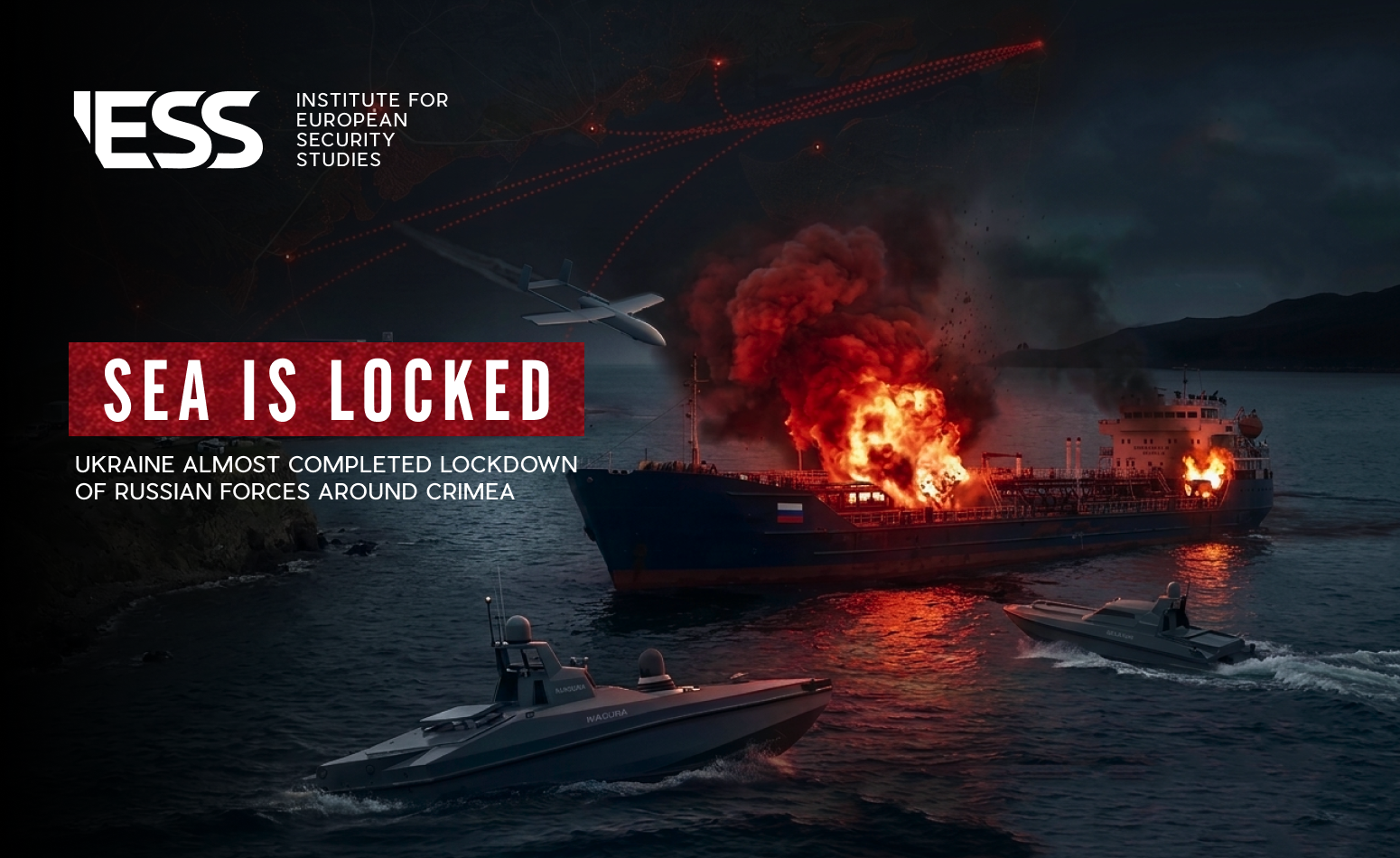
Ukraine finalizes the lockdown of Russian forces around Crimea
For four years, Russia treated the Sea of Azov as a private lake. Fuel, ammunition, and grain moved across it with barely a second thought, shielded less by real defenses than by distance: Ukrainian strike drones simply could not reach that far. That assumption no longer holds.
By mid-July, Ukraine's Unmanned Systems Forces, under Commander Robert Brovdi, had struck 116 Russian vessels in just nine days, forcing Moscow's own hand. Both chokepoints that give the Azov Sea any value as a shipping lane, the Don-Azov Canal linking it to the Don river system and the Kerch Strait linking it to the Black Sea, have been closed since the evening of July 10, with no date given for reopening either.
CNN reported that satellite imagery and vessel-tracking data now show long queues of ships stacking up on both sides of the sea. The Institute for the Study of War reads this as a continuation, not a one-off event: a further stage in Ukraine's campaign to cut occupied Crimea off from Russia's supply network and to disrupt the sea lanes Moscow depends on for fuel and grain, with wheat futures on Euronext already up 4% in a single day on rumors of the closure.
Beyond Crimea: A Regional Economy Under Strain
Crimea was never the only thing riding on these sea lanes. Fuel shortages are spreading into occupied mainland areas too, including the captured ports of Mariupol and Berdyansk, which relied on the same routes now closed. The target list has shifted as well: alongside tankers, dry cargo vessels are increasingly turning up among the wrecks, much of it grain harvested on occupied Ukrainian land and shipped out through Russian-held ports since 2022. Hitting those vessels serves two purposes at once, choking fuel logistics and cutting off a trade that was stolen to begin with.
Therefore, this is no longer just a supply problem for Crimea: near-port infrastructure along the entire Russian side of the Azov coast, from Taganrog down to Temryuk, is being ground down by the same pressure, and that stretch of coast anchors a regional economy with no direct link to the war effort at all.
No Road Out
Video confirmation of these strikes now arrives daily, and nothing suggests Russia has found a way to reverse the pattern. Barring a countermeasure that has not yet appeared, the network of ferries and short sea crossings that has kept the peninsula supplied looks unsustainable in its current form.
The only fallback is moving cargo overland, but that means routing it closer to Ukrainian reach, well within range of the same drones already hitting refineries and fuel depots further north. Trucks and freight trains are not a harder target than ships; if anything, they are an easier one, and that only adds to the fuel shortages already caused by the refinery campaign.
We reviewed the situation with the land logistical lockdown a month ago, and the situation has not improved ever since for the Russians. Quite the opposite: Ukraine managed to disrupt nearly all connections, forcing the cargo vehicles to wait in lines for passage - becoming easy targets for the same drones striking vessels in the Azov Sea. Even worse, given the proximity of the routes to Crimea that remain available, such as through the city of Armiansk, to Ukraine-controlled territory, even frontline drones can often reach the supply routes to the peninsula. It is expected that the situation will continue deteriorating and culminate by the end of the summer.
The lockdown of Crimea's logistics was never hypothetical. It has already happened, one burned-out tanker at a time, and the Sea of Azov is the clearest evidence of it.