
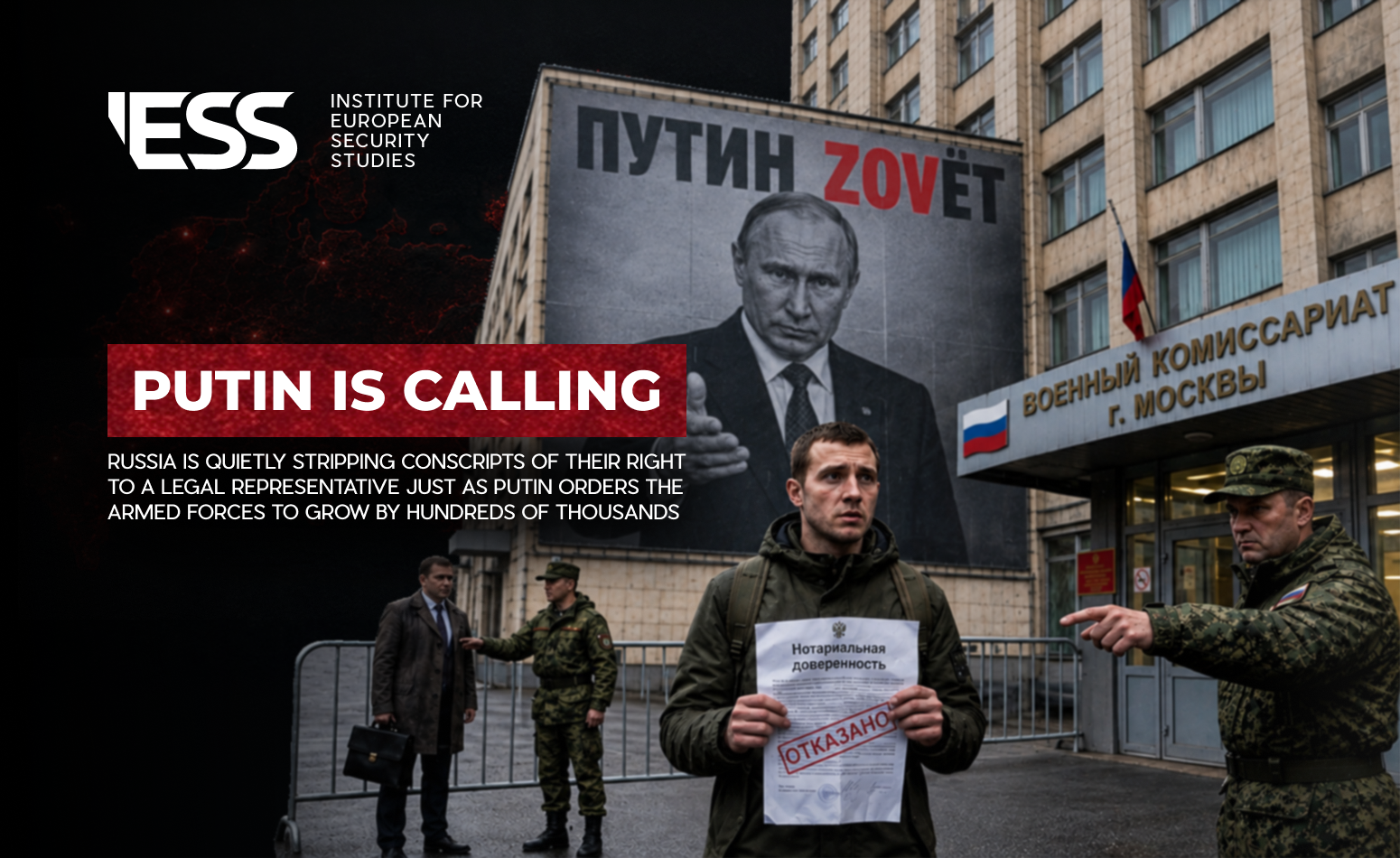
Putin Is Calling
Russia is quietly stripping conscripts of their right to a legal representative just as Putin orders the armed forces to grow by hundreds of thousands
Notaries in Moscow, Krasnoyarsk Krai, and Samara Oblast have started refusing, as a matter of routine rather than exception, to certify powers of attorney that would let a conscript's relative or lawyer deal with his military enlistment office on his behalf.
Until recently, this kind of refusal was rare enough that anyone turned away could simply walk to a different notary and get the document signed there instead.
That workaround no longer reliably exists. The refusals now arrive in a pattern consistent enough, and timed closely enough to President Putin's September 28 decree raising the armed forces' authorized strength to 2.44 million people, including 1.55 million active servicemembers, that it looks far less like a coincidence of bureaucratic caution and far more like groundwork being laid before the next mobilization wave actually starts.
The restriction with no law behind it
Nothing in Russian federal law bars a conscript from appointing someone else to handle his dealings with a voenkomat. What's changed is what notaries will agree to put in writing. Several are reportedly willing to draft a power of attorney covering the narrow act of submitting paperwork, but refuse to include the authority a representative would actually need to matter, standing in during a medical commission or formally processing removal from military registration.
Strip those two powers out of the document and the practical effect is the same as banning representation outright: the conscript still has to show up in person, at the one place where showing up in person carries the highest risk of walking out with a call-up notice in hand.
Letters standing in for law
Human rights groups tracking the pattern, including the Conscript's School and the Movement of Conscientious Objectors, say conscripts are being turned away by multiple notaries in a row, each citing guidance letters from regional notary chambers and local prosecutors' offices.
Those letters are not legal acts. They carry no binding force a court would recognize, and a notary who ignored one would not, on paper, be breaking any law by certifying a full power of attorney anyway.
In practice, notaries are treating informal guidance from bodies adjacent to the security services as though it outranked the federal legislation that actually governs their profession, and Movement of Conscientious Objectors coordinator Tymofii Vaskin describes this as sustained pressure on the notary community itself, not a series of unrelated individual decisions.
A rule nobody had to pass through parliament is functioning, region by region, exactly like one that was.
Infrastructure for a draft that hasn't been announced yet
Read against the decree expanding the military's authorized size by hundreds of thousands of people, the sequence makes a certain grim sense.
A government planning to pull a large number of additional men into uniform has an obvious interest in making sure as few of them as possible arrive at their local recruiting office already represented by someone who knows how to slow the process down, request a medical deferment, or formally contest a registration decision.
Closing that door through notaries rather than through a visible change in conscription law accomplishes the same goal while leaving no statute for anyone to challenge.
There is no new restriction to repeal, because officially there is no restriction at all, only notaries exercising professional caution the Kremlin can disavow any time the pattern becomes inconvenient to admit to. However, that is precisely the design: the government that wants to mobilize more people with less resistance does not need to write a law stripping conscripts of legal representation.
It only needs enough notaries, in enough regions, quietly declining to put the relevant two sentences on paper, and the right to a representative survives in name only, available to anyone who no longer needs it because he is already standing in the recruitment office being processed.