
Borrowed Authority
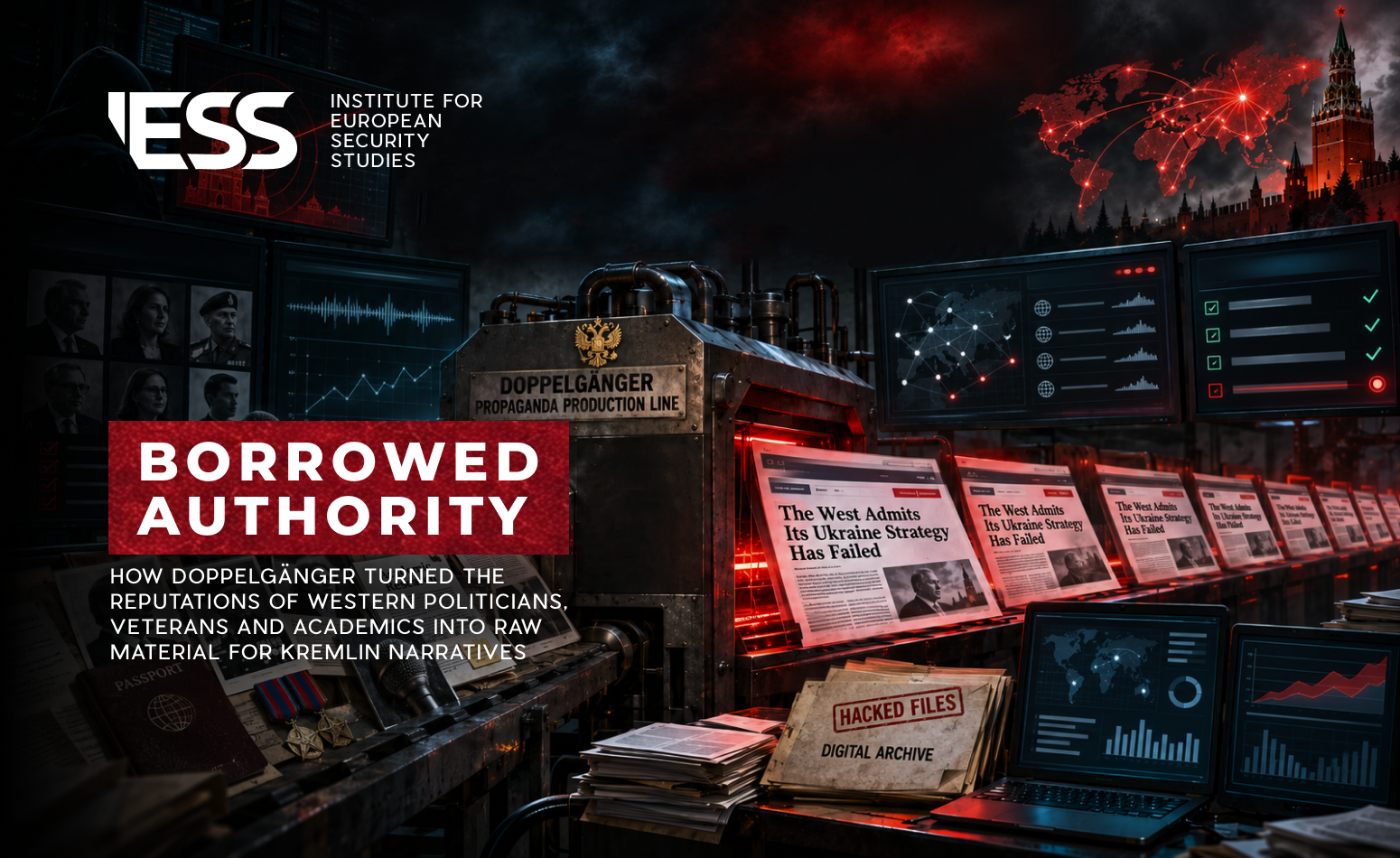
A hacked archive of more than 500 interviews shows how Doppelgänger turned the reputations of Western politicians, veterans, and academics into raw material for Kremlin narratives, often without their knowledge, and why shutting down a website did not shut down the machine
Investigators who worked through an archive stolen in a 2024 hack of Recent Reliable News, one of the central sites of the Russian network known as Doppelgänger, published their findings on November 12. The archive holds more than 500 interviews with politicians, former military officers, ex-intelligence staff, academics and civic figures from over 50 countries, and the network turned them into roughly 1,800 publications.
Interviewees came from the United States, Canada, the United Kingdom, Germany, France, Bulgaria, and other states; far from all of them knew where their words would end up.
When we described Doppelgänger functioning, the central point was that the operation runs like a production line with a client, a budget, and a quality process. However, the archive adds an inventory list to that picture.
Among the things the line needs to manufacture, one is hardest to fake: a credible human being.
Credibility as a raw material
A cloned news site can copy a masthead in an afternoon. A claim that sanctions are failing or that military aid to Kyiv is wasted money still sounds like propaganda until someone with a title, a uniform in their past, or a university chair says something close to it. The network solved that problem by collecting such voices at scale: it interviewed them, published their remarks on Kremlin-linked outlets, and let the résumé do the persuading.
The terminology matters here, and FIMI (foreign information manipulation and interference) is the accurate label for what the archive represents. Disinformation in the narrow sense means deliberately false content. Much of what the archive describes involves real people saying real sentences, which makes the manipulation sit in the selection, framing, and placement.
A retired officer's cautious remark about the limits of Western stockpiles reads very differently under a headline announcing that Europe is running out of weapons for a lost cause. The interviewee supplied the sentence. The network supplied the meaning.
That distinction also explains why so many interviewees were unaware. Nothing in the original conversation had to look suspicious. A friendly request from a media outlet with an unfamiliar name, a courteous journalist, a question within the speaker's field: the manipulation happened afterwards, in rooms the speaker never saw.
What the borrowed voices were used for
The narratives these voices carried are consistent with everything IESS documented about the network. Military aid to Ukraine is portrayed as futile or harmful. Sanctions on Russia are portrayed as a self-inflicted wound. Responsibility for the war and its costs is shifted from Moscow to Kyiv, Brussels, and the governments that back Ukraine. The target is political unity, and the working assumption behind the entire effort is that if enough respectable-sounding people question the policy, the policy eventually becomes negotiable.
The network feeds on ordinary grievances to make that case. Energy and fuel prices, wages and pensions, hospital budgets: each is real, and each can be recast as the invoice for supporting Ukraine.
Alliance4Europe assessed that accounts linked to Doppelgänger used the social context of the French protests in autumn 2026 to push anti-Ukrainian and Euroskeptic narratives, which is exactly the pattern of attaching a foreign message to a domestic argument that was already burning.
An expert quote adds a second effect that a bot post cannot. Once a sentence from a named foreign authority exists, national politicians and commentators can repeat it as though it were independent evidence.
Repetition inside national debates normalizes the claim and gives radical parties a citation they could not have produced themselves.
A website is not the machine
The 2024 hack was a real setback for Recent Reliable News, and many of the network's sites have since been blocked. The archive, however, also shows how little those setbacks cost. After the breach, the site moved to a Turkish domain and relaunched under a new full name, Researchers & Reporters Network. The brand changed, the address changed, and the operation continued.
Doppelgänger, which Western governments and research organizations link to the Social Design Agency working for the Russian presidential administration, behaves like an institution rather than a website.
Institutions survive the loss of an office. Treating each takedown as a victory misreads the contest, because the scarce resource on the Russian side is the human network of writers, designers and, as the archive shows, willing or unwitting authorities, and domains are cheap to replace.
What follows
Three practical conclusions follow from the archive.
- Experts, officials and former officers who accept interview requests from unfamiliar outlets should check who owns the outlet, where the piece will appear and what the written terms of use are, and should ask for the final text before publication. A record of having spoken to a Kremlin-linked site is now a reputational risk that can attach to anyone with a public profile.
- Newsrooms and political offices that quote foreign experts should trace the quote to its original source before repeating it, since an authority borrowed twice looks the same as an authority earned.
- Governments and platforms should aim at the network rather than the domain: the people, the payment trails, the production routines.
The archive tells us a story of a quiet shift in how Russian influence work is staffed. Kremlin no longer has to find Europeans who agree with it – Putin`s staff only has to find Europeans who can be quoted, and Europe's open public sphere supplies those in abundance unless its own experts learn to protect their names.