The art and the artists
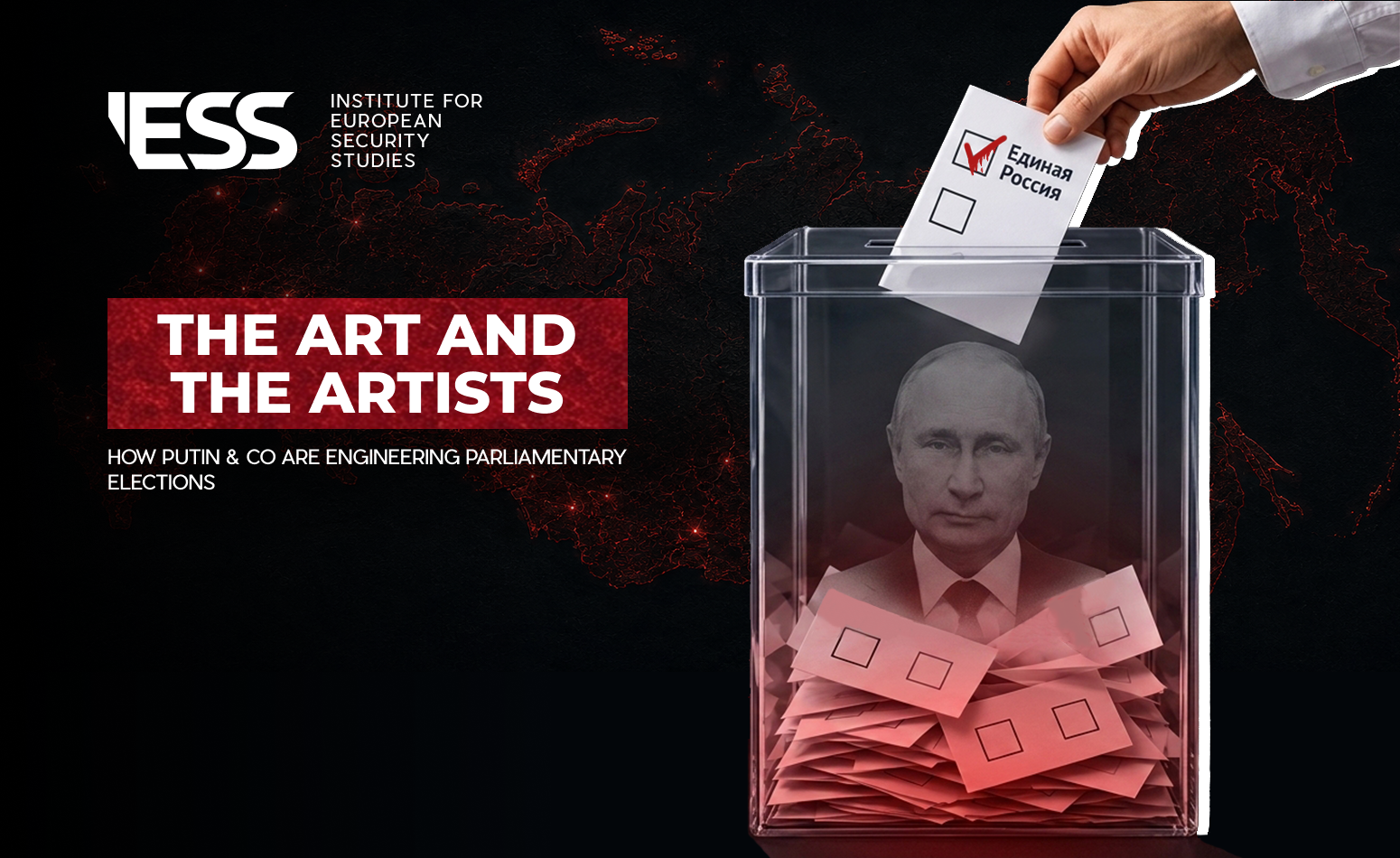
How Putin & Co are engineering parliamentary elections
The 2026 Russian parliamentary elections represent the culmination of a long-term strategy to entirely eradicate political competition and solidify the regime's wartime vertical. These elections aren't a democratic contest, but rather a highly choreographed administrative procedure designed to rubber-stamp the Kremlin's policies. Over the years of Vladimir Putin's rule, the genuine non-systemic opposition has been systematically dismantled – its leaders exiled, imprisoned, or stripped of any legal capacity to participate in the political process.
Now, the state apparatus has finalized the purification of the systemic opposition, ensuring that the political configuration of the future State Duma was determined long before the first ballot was cast.
The preemptive purge of the anti-war opposition
The Kremlin’s approach to the 2026 campaign demonstrates that even the most marginal political competition is tolerated only as long as it poses absolutely no threat of mobilizing protest or anti-war sentiment. The preemptive neutralization of dissenting voices has been executed with bureaucratic precision. According to data from the Russian Election Monitor, by the summer of 2026, the state had utilized various mechanisms to bar 32 party representatives from participating in the elections.
Furthermore, 58 politicians received administrative fines, 13 became subjects of criminal cases, and 10 were officially designated as "foreign agents."
The most glaring example of this institutional purge was the targeted removal of the Yabloko party. On August 10, 2026, the Supreme Court of the Russian Federation, acting on a lawsuit filed by the Rodina party, officially canceled the registration of Yabloko’s federal list.
This judicial maneuver wasn't a routine legal dispute; it was a deliberate political elimination. Yabloko was the only registered party remaining in the country with an openly anti-war stance. Its exclusion left exactly 10 heavily vetted parties on the federal ballot, proving that the regime actively weaponizes its judicial mechanisms to eliminate even systemic opposition elements from the federal campaign.
While 4,436 candidates were technically registered for the elections, the strategic use of "foreign agent" laws, court rulings, and criminal cases allowed the authorities to filter out any politically inconvenient figures at the very starting line of the campaign.
Engineering the outcome through administrative KPIs
In modern Russia, electoral outcomes aren't decided by voter preference, but by Key Performance Indicators (KPIs) set by the Presidential Administration. The leadership of the ruling United Russia party and the Kremlin dictate the exact mathematical targets that regional authorities are obligated to deliver. According to internal directives, the central government mandated a target of approximately 50% voter turnout and 55% of the vote for United Russia, with specific adjustments made for individual regions based on their local political climates.
Consequently, regional governors understand precisely what statistical result is expected from their territories well before voting begins.
To achieve these predetermined figures, regional and municipal authorities deploy a massive, centralized administrative resource. They exercise direct leverage over schools, hospitals, social institutions, and state-dependent employers, coercing them into compliance. This allows the regime to micromanage and successfully execute its turnout and voting plans at the organizational level, completely overriding the concept of free electoral choice.
The fusion of party and state
United Russia doesn't participate in these elections as a conventional political competitor; it operates as an inseparable extension of the state vertical. This fusion of party and government is glaringly obvious in the architecture of its candidate lists. Out of 57 regional groups for the State Duma elections, the overwhelming majority are headed by sitting regional executives. Prominent figures such as governors Andrei Vorobyov, Igor Kobzev, Denis Pasler, Dmitry Makhonin, Vladimir Mazur, and Moscow Mayor Sergei Sobyanin occupy the number one spots on their respective regional party lists.
The integration goes deeper into the municipal and civic levels. The United Russia lists are densely populated with mayors, district heads, university rectors, chief physicians, and the directors of major state enterprises.
By merging state positions with the status of key party figures, United Russia secures an insurmountable administrative, financial, and informational monopoly over its nominal competitors.
The blackout of independent oversight and media
This administrative monopoly is heavily reinforced by the absolute state control over the media landscape. The Kremlin’s dominance over the largest television networks and the broader digital information space effectively prevents any opposition forces from accessing a wider audience.
The scale of this imbalance is structural; during previous election cycles, the OSCE Office for Democratic Institutions and Human Rights (ODIHR) documented that between 70% and 90% of all political editorial content on federal channels was devoted exclusively to the president and representatives of the ruling authorities.
To ensure that this engineered process proceeds without inconvenient external scrutiny, Russia deliberately refused to invite a full-fledged OSCE/ODIHR observation mission. The 2026 elections mark the third consecutive national vote in Russia conducted in a total blackout of independent international observation.
As we have consistently researched and analyzed the Kremlin's preparations for a prolonged conflict, internal absolute control is a prerequisite for sustained external aggression. Much like the systematic dismantling of independent media and institutional checks observed in aligned autocratic regimes, the Russian state has perfected the mechanics of a political monopoly.
The 2026 parliamentary elections were never meant to be an exercise in democracy: as any other in Russia`s history, all votes are strictly orchestrated as a security operation, which was designed to enforce total domestic obedience.